

Wahya Circle
Tuesday Travels
World Studies 101
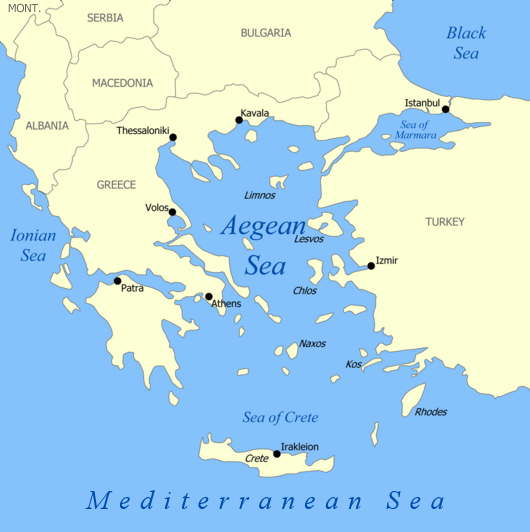
Aegean Sea
Cycladic, Minoan, Mycenaean
Taking a step back to the Mediterranean area, we look at one of the many sources of Divine Feminine energy in Western Esotericism carried with the Romans as they were on a seemingly endless conquest across all of Europe.
We see that three major cultures preceded the Greeks in and around the Aegean Sea. These cultures were the result of culminating, or banding together, and the invading of even earlier tribes. For now, until more research is done, we mostly speak of the land and not the people as there is some belief the “whole truth” has not been told yet. These cultures came to be known as the Cycladic, Minoan, and Mycenaean cultures over time. There are earlier Indigenous cultures as stated but those stones are only now being turned over and answering as to why they truly came together.
CYCLADIC
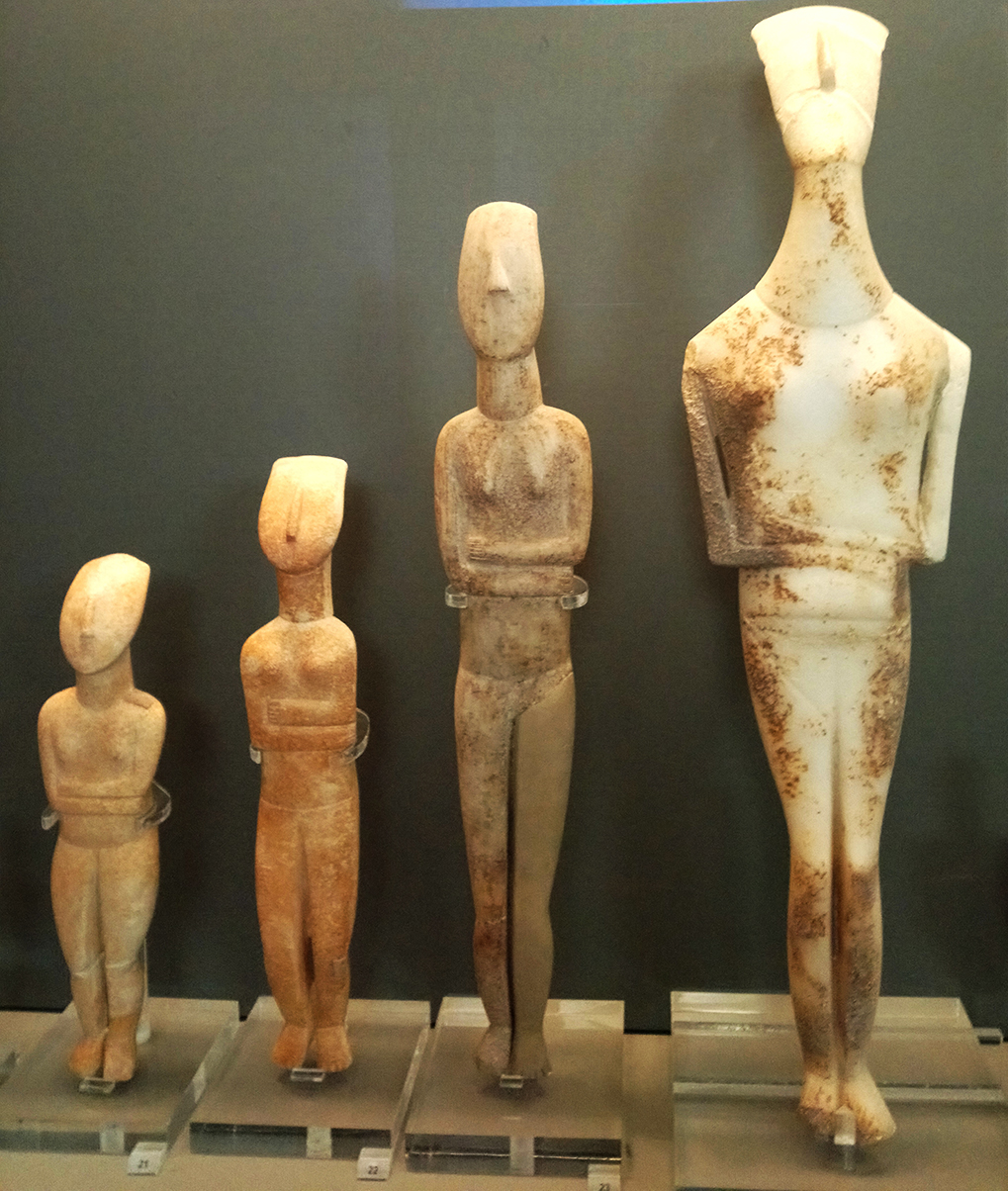
The earliest of these is considered Cycladic. Most known for its favor towards materials of bronze, the use of it lent to the naming of “the Bronze Age”. Much of the freestanding sculptures made during that time, with most of the items found being statues, did not survive being melted down for ulterior motives and various objects of Matter. There is little to no record of representation of Spirit outside of a few marble carvings, which strangely resemble Isis.
It should also be noted here, before the imposition of the Minoan culture, the one known as “Cycladic” was another indigenous tribe that had no records of war.
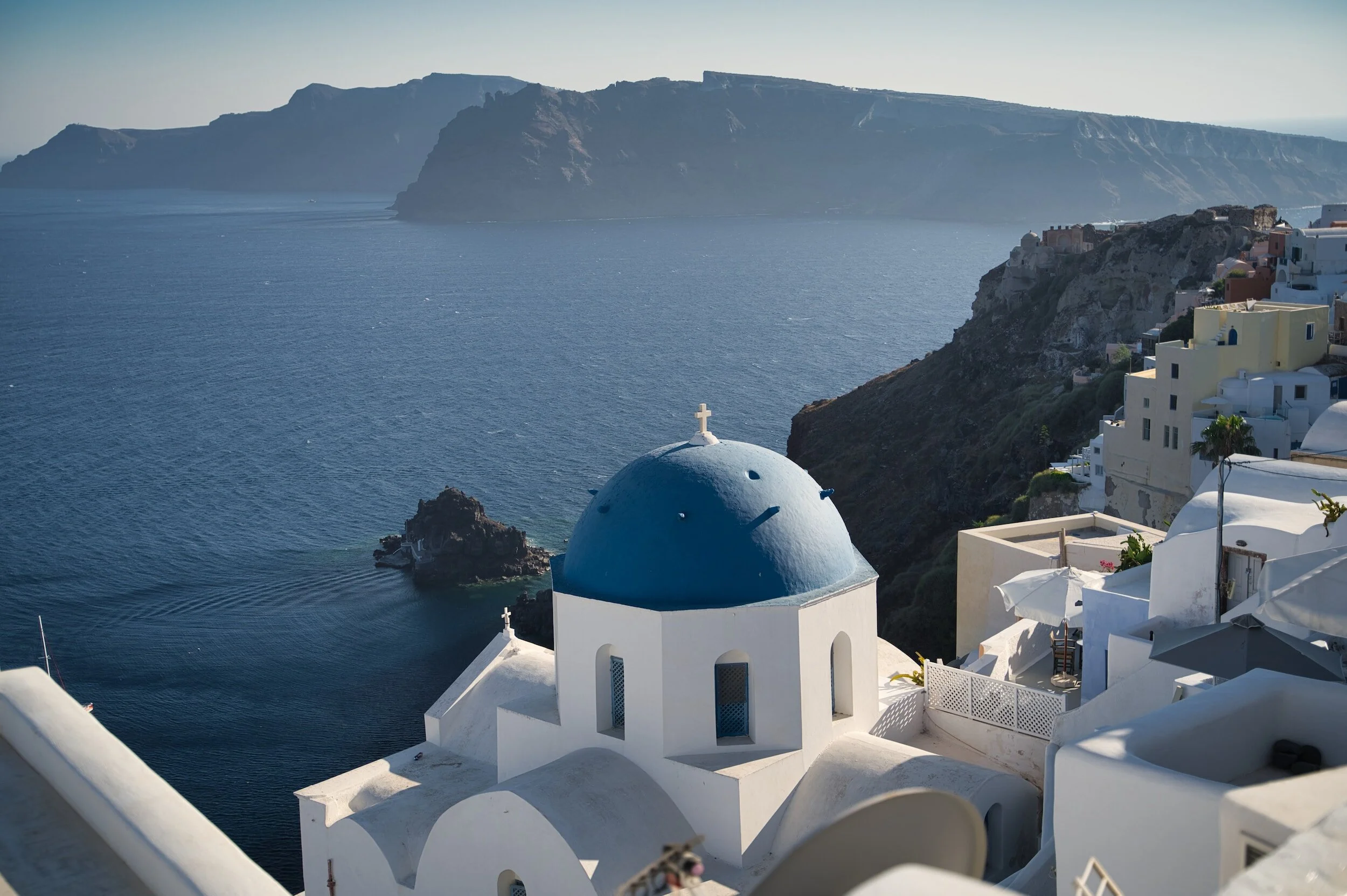
This land was always envied by outlanders, such as the Teutonic assisted Romans and prior to that, the Celtic. The name Cyclades means “encircling islands”, a good fortification to be had. Their name indicated their lands form a rough circle around the sacred island of Delos (Dílos). In the mythos, this is the birthplace of Artemis and her brother Apollo. (All of the islands have some archaeological interest.)
Cycladic culture (also known as Cycladic Civilization or, chronologically, as Cycladic Chronology) flourished from around 3200 BCE until around 1050 BCE. The remnants of the culture are found throughout the islands of the Aegean Sea. The significant Late Neolithic and Early Bronze Age Cycladic culture is best known for its schematic flat female idols carved out of the islands' pure white marble centuries before the great Middle Bronze Age ("Minoan") culture arose in Crete, to the south.
They were known for their art in the region as no one else produced such things. The Cycladic worshiped various incarnations of an Earth Goddess and a Sky God, just as many Indigenous cultures have throughout the world. The carvings, stampings in pottery, and statue sculptures portrayed many female characters.
MINOAN
After a time, we see the Cycladic morph into the Minoan through imposition, continuing the same Divine worship as before. It is often believed that this is where Anima Mundi really shined with two cultures working for the benefit of both. There was no need to change life as it was. But something happened.
It appears that “in the beginning” of this marrying of cultures, no evidence of heavily fortified buildings existed. The early art work and pottery does not show warfare, and their early “weapons” appeared more ritualistic than functionary. Initially, there is no evidence of a Minoan army or any Minoan domination outside of Crete.
But Crete became “weapon possessed”. War moved to the forefront of their culture. We have yet to discover why became this way. Who were they fighting? Was it another tribe? Greece? Egypt? Was it another entity? Was “the enemy” even from this planet, or the planet’s ocean? Research is ongoing. Keep a watchful eye.
None the less, Minoan civilization, a Bronze Age civilization of Crete, flourished from about 3000 BCE to about 1100 BCE. Its name derives from Minos, either a dynastic title or the name of a particular ruler of Crete who has a place in Greek legend. The Minoans traded with the Greeks, Egyptians and others in the Eastern Mediterranean region. This was all peaking around 2000 BCE. Competition for resources was becoming strained as trade grew. As Nature would have it, all animals – homo sapiens included - began to compete more often for resources like food and water. If climate was changing – they felt it being an equatorial place.
After some tribal abandonment and continued growing competition with Minoan civilization, the Cycladic seemed to have assimilated completely just as the Ainu and Okinawan were assimilated by Nipponese colonization.
MYCENAEAN
As time passed, the Minoan culture gave way to the late Helladic or Mycenaean, which was active from around 1600 BCE until about 1100 BCE. That eventually led to the Greek culture, who had a “Dark Ages” around 1100 BCE at the fall of the Mycenaean. Then around 8 BCE, it led to the Archaic Greek period.
Hekate, was accepted as a Goddess at an early date into Greek religion but probably derived from the Carians in southwest Asia Minor, who most likely picked it up in trade with the Egyptians. In Hesiod, She is the daughter of the Titan Perses and the nymph Asteria and has power over Heaven, Earth, and Sea; hence, She bestows wealth and all the blessings of daily life. But, many believe, and know, She is much older in Divinity than that. It is felt that a type of racial tribalism began happening early in our ancient history. Concepts were utilized, just as they still are today, only they call it “cultural appropriation”. These concepts are why most Practitioners level with their magicks and begin learning what their genealogic root, or tie, is for this lifetime. More doors to open!
World Studies 101
Aegean Time Lines
As stated above, there were tribes prior to this point but it is perceived that the history was manipulated as it was being written. In time, it is suggested you revisit the origin stories of ALL avatars of Divinity. Always continue to study and look for fresh ideas and truer FACT BASED meanings.
5000 BCE
The Cyclades are first inhabited by settlers from Asia Minor.
3200 BCE - 1100 BCE
The Cycladic Civilization in Greece.
3000 BCE - 2000 BCE
First rock-cut burial chambers at Akrotiri.
3000 BCE - 2200 BCE
The first archaeological evidence of organized communities in the Cyclades.
3000 BCE - 2000 BCE
Distinctive minimalistic standing marble figurines are produced in the Cyclades.
2700 BCE - 2300 BCE
The first depiction in art of the aulos musical instrument appears in Cycladic sculpture.
2200 BCE - 1700 BCE
Evidence of town planning and more sophisticated architecture in the Cyclades.
2000 BCE - 1650 BCE
Akrotiri on Thera reaches its peak of prosperity and becomes a flourishing Mediterranean trading center with all those who surrounded the Aegean Sea.
1700 BCE - 1400 BCE
The culture in the Cyclades is increasingly influenced by Minoan Crete. (What some view as a separate Indigenous people.)
1650 BCE - 1550 BCE
Eruption of Thera and consequential tidal waves, destruction of Akrotiri and other Aegean cultural centers.
1400 BCE - 1100 BCE
Culture in the Cyclades is increasingly influenced by the Mycenaean civilization of mainland Greece.
1100 BCE
Evidence of settlement destruction and abandonment across the Cyclades islands was occurring. Matter was shifting as was Spirit. Asiatic Turkey contained an important temple of Hekate by this time. Every year, great festivals were celebrated. Tacitus, when speaking of the worship of Trivia among the Stratoniceans, evidently meaning “Hekate”. Its site is located near Turgut, Asiatic Turkey. Spirit. Feminine. Moon.
700 BCE
The temple of Apollo is built on the island of Delos.
700 BCE - 600 BCE
Temples are built in honor of Apollo, Demeter and Dionysos on the island of Naxos.
700 BCE
Paros begins to export its Parian marble across the Greek world and it is widely used in temples and sculpture.
630 BCE
Greek colonists from the island of Thera found the city of Cyrene in North Africa.
600 BCE
The Terrace of Lions was dedicated to “Apollo”. Matter. Masculine. Sun.
550 BCE
Oldest surviving sculpture of a winged Nike found on Delos.
550 BCE
The silver drachma of Delos depicts a lyre - symbolic of Apollo - on its reverse side.
540 BCE
Athens removes and prohibits further burials on Delos to purify the sacred island.
499 BCE
Naxos is attacked by Darius' Persian forces.
490 BCE
Naxos is attacked for a second time by Persian forces.
480 BCE
Cycladic states contribute to the victorious Greek forces against the Persians at the Battle of Salamis.
479 BCE
Colonized Cycladic city states contribute to the victorious Greek forces against the Persians at the battle of Plataea.
478 BCE
Many Cycladic states join the Athenian led Delian League as a defence against Persian aggression.
478 BCE - 454 BCE
The treasury of the Delian League is kept on Delos until its removal to Athens.
467 BCE
The island of Naxos rebels against Athenian dominance of the Delian League.
431 BCE - 404 BCE
The Cycladic city states side with Athens in the Peloponnesian war against Sparta and her allies.
417 BCE - 415 BCE
Melos, after supporting Sparta in the Peloponnesian War, is attacked by Athens.
377 BCE - 355 BCE
The Cycladic city states join Athens in the Second Athenian League against Sparta .
363 BCE
A rebellion against Athenian dominance of the Second Athenian League on Keos is quashed by Athens.
166 BCE
Rome gives dominion over the Cyclades to Athens.
166 BCE
Rome puts Delos under the jurisdiction of Athens and makes the island a free port.
88 BCE
Mithridates attacks and detroys the island of Delos. The prosperity of the island and the friendly relations with the Romans were the main cause of its destruction. Delos was attacked and looted twice: in 88 BC by Mithridates, the King of Pontus, an enemy of the Romans, and later, in 69 BC, by the pirates of Athenodorus, an ally of Mithridates.
69 BCE
Delos is sacked by pirates. (see above)
41 BCE
Rome takes control over Naxos in the Cyclades.
The rest fills the last 2000 years of history, and most know what happens. The Roman Senate conquered and colonized …some believe that is what is here in America. The “Senate” came to the “America” and established itself and its Matter-ialistic rule.
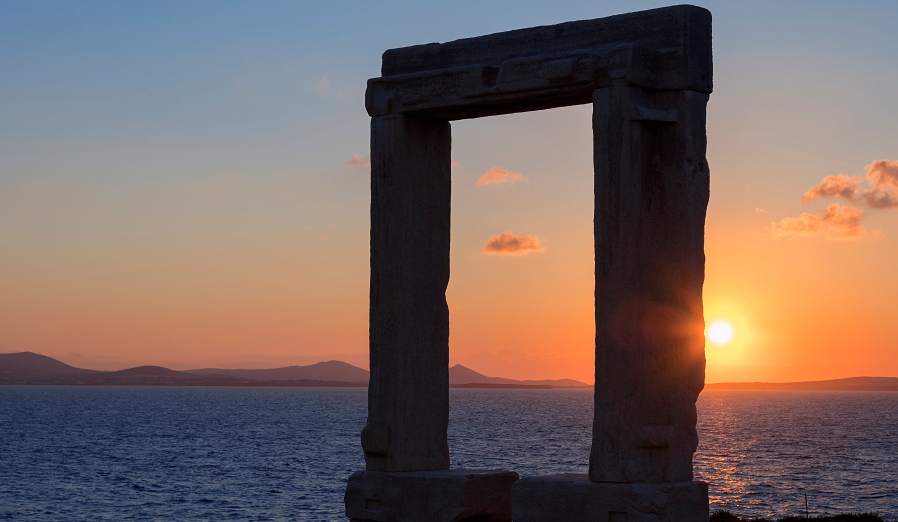
World Studies 101
Delos
A sacred place, some think a volcanic explosion from the water's depths erupted - and Delos was born into the heart of the Aegean Sea. Others think it was that the waters subsided as one of the last geological phenomena of the area, and the island was revealed to Her people. From 'adelos' became 'delos', which means 'having appeared'. That is when the sun’s rays fell upon it with such strength that it was deemed one of the brightest points on the Earth – a meteorological phenomenon. The second brightest spot being in Alaska and the third somewhere in Hawaii. Do you not find that interesting? Imagine, a spot where some consider Spirit and Matter, united, and gave birth to the Divine avatars we see today.
Even the Hindus think of Delos as holy as their Benares. It is from this that the wonderful myth of the birth of the Sun-god , Apollo, was born. We say this because it is known by some, that myth follows fact. This is where Light was born from Darkness, which for Greek seafarers was the most precious thing of all.

Tuesday WO4
General - Journal - Book of Shadows
SUBMISSION: NONE
EMAIL
Three Circles Medicine & Magick™
Please utilize the above email link
IF NO BUTTON IS PRESENT
to receive full Submission credit.