

Wahya Circle
Tuesday Travels
World Studies 101
Indus River Valley
Ancient India
The Indus Valley
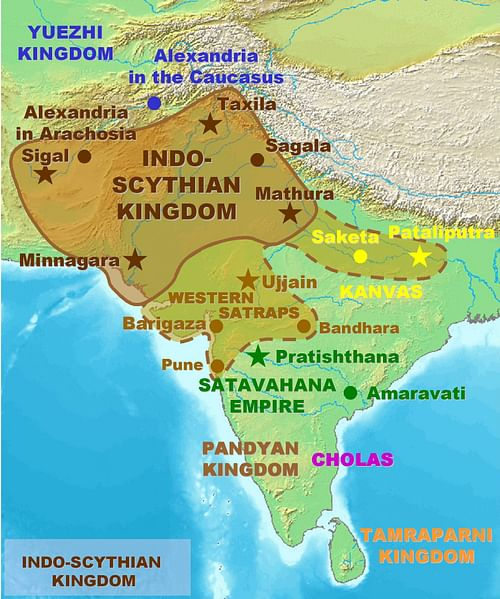
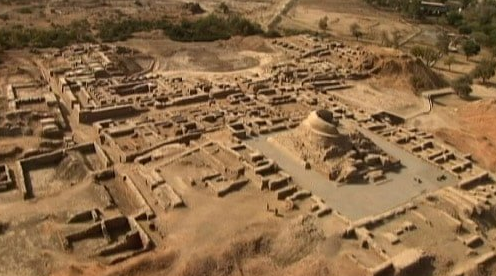
We will touch back to one of the oldest ancient civilizations that we have walked, the Indus Valley. An energetically powerful location for many, this land flourished between 3300 and 1900 BCE around the Indus River Basin. It is situated at the very heart of subsequent civilizations that grew in the region over time. This civilization arose in areas extending from what is today northeast Afghanistan to Pakistan -- over to northwest India. Along with Ancient Egypt and Mesopotamia, the Indus Valley civilization was one of three early organized civilizations of the settling ancient world.
Of the three, the Indus Valley was the most widespread and diverse, covering over 700,000 miles. Long ago, entire populations were settled in the Indus River basin, one of the major rivers in all of Asia. They also settled at another river named Ghaggar-Hakra which once used to flow through northeast India and eastern Pakistan. Now, Ghaggar-Hakra only flows during monsoon season. As this occurred slowly over time, the civilization dwindled.
The Indus Valley was a sophisticated and technologically advanced urban culture for its time. It is clear in evidence archeologically. The Indus Valley civilization made its capital the first urban center in the region. The people of the Indus Valley achieved great accuracy in measuring length, mass, and time, again, as evidenced on artifacts found in excavations. It was also evident that the culture was rich in arts and crafts, or being creative artisans.
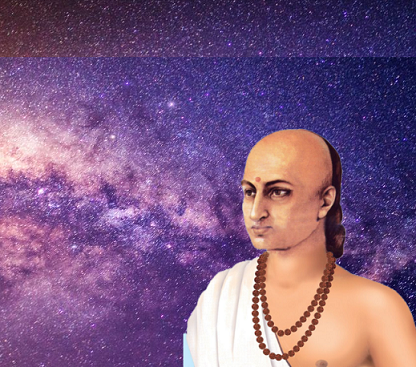
Aryabhatta. Aryabhatta (
Ancient India was home to two of the world's first cities, Harappa and Mohenjo-Daro. These cities had stone buildings, multiple stories, and a sewer system. India was one of the very first civilizations to use algebra and calculus. The number concept we now call “zero” was discovered in Ancient India by a man named Aryabhatta. Aryabhatta (476–550 CE) was the first of the major mathematician-astronomers from the classical age.
Contributions to society for its “material growth” were not the only things found in the Indus Valley. Evidence of Spirit was present and showed itself in the work of the Indian people. Worship of Kali has been rooted in Ancient East Indian belief system from as far back as 1700 BCE. Her name first appears in the holy Hindu text Rg Veda, 1700 –1100 BCE (exact dates debatable). She is also described in the Devi-Mahatmya portion of the Indian historical texts Markandeya Purana, from around 300 – 600 BCE.
The Spirit of the Divine has been here all along in countless manifestations. We simply were not looking as a people. Matter became more important than the veneration of Anima Mundi, Ancestors, or Elders. We lost our balance, and then our way.
The video link below neatly ties everything together that you have learned regarding this region – to this point. It really showcases that until a “certain group” came into being, Indigenous peoples were NOT “warring” types without intentional provocation. This video covers the Indus Valley – Ancient India for all current time
Video 7 minutes

Think About It: Caste Systems
The video link below provides you with some “mental floss”, if you will. It is about the “caste” system that affected every aspect of human life, not just in India. This Knowledge Share is also about India not having one to begin with. Today, there are locations all over the world that place Matter and the accumulation of Matter above Spirit —at all costs. It has even lent its inception to the rise of the “prosperity principles” which now exist on several continents.
Watch the video. What do you THINK? What do you FEEL? Do you see this type of mindset in other places on Earth? How might we better benefit our species instead?
#FoodForThought

Tuesday WO3
General - Journal - Book of Shadows
SUBMISSION: WO3 TUE CASTE THOUGHTS (Due by Sunday)
Please watch the video and answer Contemplations 101 in ONE PARAGRAPH or more.
EMAIL
Three Circles Medicine & Magick™
Please utilize the above email link
IF NO BUTTON IS PRESENT
to receive full Submission credit.
Lessons are subject to change without notification to Practitioners.
Late Submissions receive no credit without prior approval.