


Wahya Circle
Tuesday Travels
World Studies 101
Pre-modern History: Hispania
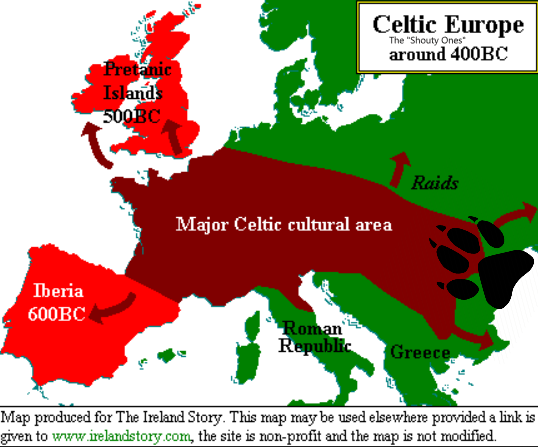
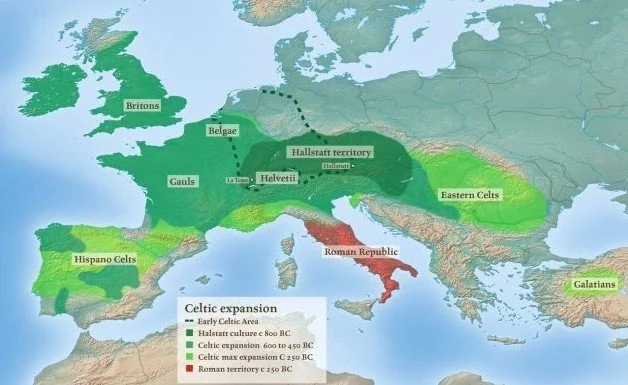
We have learned about most of Europe to this point. We have learned that the Celts inhabited this land before the Roman Empire, around the 1st century AD. Before we delve into Modern Magick we will move through a couple of final locations, Hispania being one.
Human inhabitants moved into Hispania (not the original name of the land) more than 35,000 years ago. The original inhabitants of Spain were indigenous Iberians and Celts. The Romans named the Iberian Peninsula Hispania, which is thought to be a Semitic word derived from Hispalis (Seville).
The Spanish Empire labeled indigenous people as Indios Bárbaros, which meant they were considered less evolved than some European Empires.
Archaeologically, the larger tribes were Celt, followed by the Iberian, and Basques in this region. (Some feel the Celts ruled most of Europe before the Romans.) Their names indicate their locations of settlements. Included in their number were also those who they enslaved. Yes, Celts seem to have had slaves, or indentured too. But, did they? The archeological jury is still out.
EXCELLENT KNOWLEDGE SHARE THROUGH THE VIDEO OF BASQUE HISTORY BELOW. (Be mindful of bias from those who wrote the history.)
#FightLikaABasqueForFreedom
Regardless, when we look, these locations are where those who seek it can find ancient artifacts of their life. As far as we can tell, Basque has one of the only surviving native dialects from this time. (In that region) The others are found to be “latinized”, or Roman given names.
Iron Age
The Iron Age ended with the beginning of the historiographical record as written by the Romans and their dogmatic Senate’s view. This does not represent a clear break in the archaeological record of human life here as the socioeconomic change did not necessarily bring about evolution equally for all people of Earth, specifically this region.
Because it was not written of does NOT make it disappear, although their technology did not necessarily advance. Another example of this is in the Ancient Near East where it is accepted that the establishment of the Achaemenid Empire in 550 BC is traditionally taken as a cut-off date for this Age in Asia. Again, a dogmatic rule, not a technologic change.
The Achaemenid Empire, c. 550-330 BCE, or First Persian Empire, was founded in the 6th century BCE by Cyrus the Great, in Western and Central Asia. The dynasty drew its name from Achaemenes, who, from 705-675 BCE, ruled Persis, which was land bounded on the west by the Tigris River and on the south by the Persian Gulf.
As recorded by Heroditus the ancient Greek writer, geographer, and historian, dates did not always match up to with those recorded by other ancient historians of these lands. One of the reasons we feel that occured was because those who inhabited the land before Rome were always on a LUNAR calendar.
When Rome came, they converted almost the entire world to a SOLAR calendar. These include ancients such as Boudicca, Queen of the Iceni Tribe (Celtic controlled) and in time Seneca the Younger, an Iberian philosopher and historian who became advisor to Nero. Eventually he was forced to take his own life due to his supposed involvement with some Roman conspiracies.
During the turn of the century, Rome began its further conquest of the world, which some of us continue to live through today. Colonization continues, seemingly on a “voluntary” basis, but who are we to say some of these US Territories were not “bribed” or coerced with something they desired?

Beginning Practicum
Celtic Goddesses
and Gods
A Sampling of Deity
Although the Celts consisted of societies all over the British Isles and parts of Europe, some of their Gods and Goddesses have survived time to become a part of modern Pagan practice. Here are some of the deities honored by the ancient Celtic peoples. (This is by no means a complete list!)
Although the Celts consisted of societies all over the British Isles and parts of Europe, some of their Gods and Goddesses have survived time to become a part of modern Pagan practice. Here are some of the deities honored by the ancient Celtic peoples. (This is by no means a complete list!)
Brighid, The Exhalted One - Daughter of the Dagda (Spring)
A daughter of the Dagda, Brighid is one of the classic Triple Goddesses of the Celtic pantheon. Many Practitioners honor Her today as a Goddess of the Hearth and Home, and especially of Divination and Prophecy. She is often associated with the Imbolc sabbat, as well as with fire, domesticity, and family life. Brighid is the patron of poets and bards, as well as healers and Practitioners of Magick and the Arcane Arts. Some debate Her sisters as being simply Her other personifications, such as the other Triple Goddesses of the world.
Further reading on Goddess Brigid, provided by Practitioner Baxter, Second Degree Graduatate of Golanv Circle. (LINK)
Cailleach, Ruler of Winter
Cailleach is known as a natural and destructive force in most times. She is another representation of Anima Mundi. Cailleach is known in parts of the Celtic world, Irish, Scottish and Manx as “the hag”, the Bringer of Storms, the Dark Mother of the winter months and one who cares deeply for all animal life. She is known as both a destroyer and creator Goddess. (Sound familiar?)
She is also known as a great Ancestor. According to The Etymological Dictionary Of Scottish-Gaelic, the word cailleach itself means "veiled one" or "old woman". In some stories, She appears to a hero as a hideous old woman, but when he is kind to Her, She turns into a lovely young woman who rewards him for his good deeds. In other stories, She turns into a giant gray boulder at the end of winter, and remains this way until Beltane, when she returns to life of Spring.
Cernunnos, Wild God of the Forest
Cernunnos is the Horned God found in many traditions of modern Paganism and Wicca. He is an archetype found predominantly in Celtic regions who symbolizes fertility and masculine energy. Often celebrated around the Beltane sabbat, Cernunnos is associated with the forest, the greening of Earth, and wild stags. He is a God of Vegetation and Trees in His aspect as the Green Man, and a God of Lust and Fertility when connected with Pan, the Greek satyr. In some traditions, He is seen as a God of Death and Dying and comforts the dead by singing to them on their way to the spirit world.
Cerridwen, Keeper of the Cauldron
Cerridwen is known in Welsh Paganism as the Keeper of the Cauldron of the Underworld (much like Hekate) in which knowledge and inspiration are brewed. She is who Cernunnos is helping those souls cross to meet. She is considered a Goddess of Prophetic Powers, and because Her symbol is the Cauldron, She is honored amongst Practitioners of many Paths including Wicca and various incarnations of surviving Pagan traditions.
The legend of Cerridwen is also heavy with instances of transformation. For example, when She is chasing Gwion, the two of them shapeshift into any number of animal and plants. Following the birth of Taliesen, Cerridwen contemplates killing the infant but changes Her mind. Instead, she throws him into the sea where he is rescued by a Celtic prince, Elffin. Because of these stories, change, rebirth and transformation are all under the control of this powerful Celtic goddess.
The Dagda, Father God of Ireland
The Dagda is a father god of the Celtic pantheon and plays an important role in the stories of the Irish invasions. He is the leader of the Tuatha de Danaan, and a god of fertility and knowledge. His name means "the good god." In addition to his mighty club, the Dagda also possesses a large cauldron too. The cauldron is magickal in that it had an endless supply of food in it --the ladle itself was said to be so large that two men could lie in it. (Similar to some stories that circulate out of Italy regarding a “female witch” who does the same. There was even a children’s book written of her which you will see in the weeks to come.) The Dagda is typically portrayed as a plump man with a large phallus, representative of his status as a God of Abundance.
Herne, God of the Wild Hunt
In British lore, Herne the Hunter is a god of vegetation, vine, and the wild hunt. (Similar to Artemis (Female) in Greek and Mielikki (Female) in Finnish lore.) In Celtic lore, he is similar in many aspects to Cernunnos. Herne is celebrated in the autumn months, when the deer go into rut. He is seen as a god of the common folk and is typically recognized only around the Windsor Forest area of Berkshire, England.
Herne is considered a Divine Hunter and was seen on his wild hunts carrying a great horn and a wooden bow, riding a mighty black horse, and accompanied by a pack of baying hounds. Mortals who are in the way of the Wild Hunt are swept by it. They are often taken away by Herne, destined to ride with him for eternity. He is seen as a harbinger of “bad” omens, especially to those of the royal family.
Lugh, Master of Skills
Lugh is the Celtic god honored for his skills and gifts as a craftsman. He is the god of blacksmiths, metal workers, and artisans. In his aspect as a harvest god, he is honored on August 1, on the festival known as Lughnasadh or Lammas. Lugh is associated with craftsmanship and skill, particularly in endeavors involving creativity. Although not specifically a war god, Lugh is known as a skilled warrior. His weapons include a mighty magick spear, which is so bloodthirsty that it often tries to fight without its owner. According to Irish myth, in battle, the spear flashed fire and tore through the enemy ranks unchecked.
The Morrighan, Goddess of War and Sovereignty
The Morrighan is known as a Celtic war goddess, but there is a lot more to Her than that. She is associated with rightful kingship, and most importantly -- the sovereignty of the land. The Morrighan often appears in the form of a crow or raven to the one She calls to her service. Other times, She is seen sending a group of them, especially if the person is not listening to their Divine “inner voice”.
In the stories of the Ulster cycle, she is shown as a cow or a wolf. The connection with these two animals suggests that in some areas, she may have been connected to fertility or land and in others to protection or destruction. Similar to many of goddess of the Anima Mundi. (Hekate)
Rhiannon, Horse Goddess of Wales
In the Welsh mythological cycle, the Mabinogion, Rhiannon is known as a goddess of the horse. However, she also plays a crucial role in the kingship of Wales. The horse appears prominently in much of Welsh and Irish mythology. Many parts of the Celtic world —“Gaul” in particular —used horses in warfare, and so it is no surprise that these animals turn up in the myths and legends or Ireland and Wales.
Taliesin, Chief of the Bards
Although Taliesin is a documented historical figure in Welsh history, he has managed to become something more. (Much like Shango of Nigeria) His story of mythos elevated him to the status of a minor deity. Taliesin appears in the tales of everyone from King Arthur to Bran the Blessed. Today, many modern Pagans honor Taliesin as a patron of bards and poets since he is known as the greatest poet of all.
So much of what we know is from the writings of the Caesars and their contemporaries, as well as the Christian monks who came along later. Celtic deities are generally connected to various aspects of daily life just as all the Divine we have learned about are from around the world. They are connected to all the forms of Divine Energy that drive everything from domestic and labor-related tasks to Elements of the natural world, like streams, trees, and hills.
Beginning Practicum
Goddess Brigid
Three folds in my garment,
yet only one garment I wear,
Three leaves in a shamrock,
only one shamrock I bear,
Frost, Ice and glittering snow,
pure Element Water, flow!
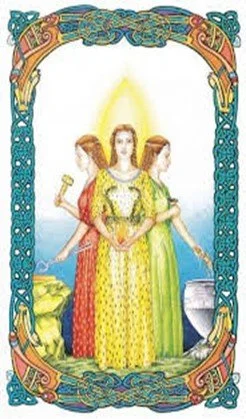
Brigid is a Celtic Goddess known for poetry, healing and smithing among many other things and strongly associated with fire. Like many other Celtic Goddess, Brigid is known by three aspects, with several ways of viewing her as she governs so much. Brigid is also well known as a protector of home and family, as well as transformation, wisdom, inspiration, and transformation. With a strong association with springtime as well her feast day, February 1, known as Imbolc is recognized as the first day of spring. Saint Brigids Day or Imbolc was traditionally a time for weather prognostication, which is continued to this day much like Groundhog Day.
‘The serpent will come from the hole,
On the brown day of the Bride,
Through there should be feet of snow,
On the flat surface of the ground”
Brigid is not only worshiped as a Pagan Goddess but also as a Catholic Saint. Her role as St. Brigid is no different then her role as the Goddess Brigid. As a Saint she holds the aspects of the power of endurance, practical love, and bridging differences. She also still as a Saint considered patroness of healers, poets, blacksmiths, and livestock. No other western Goddess has an unbroken history of worship no matter the faith they accepted. The Monastery in Kildare which was once a pagan sanctuary for followers of Brigid holds a perpetual flame dedicated to her.
It was first tended faithfully by women who honored Her as a Goddess and now is tended by nuns. As late as the twelfth century, Six Hundred years after Saint Brigid’s death the flame still burned. In 1993, the perpetual flame was relit and it burns to this day.
“Brigid of the spark,
Brigid of the flame,
Brigid of the embers,
I call your name.
Brigid of inspiration,
Brigid of shielding,
Brigid of comfort,
Your name I am wielding!
Be in my flame, O Brigid of courage.
Be in my flame, O Brigid of grace.
Be in my flame, O Brigid of beauty.
This night and every night, this day and every day!”
~inspired by Tending Brigids Flame
by Lunaea Weatherstone (modified by Rev Rchoz)
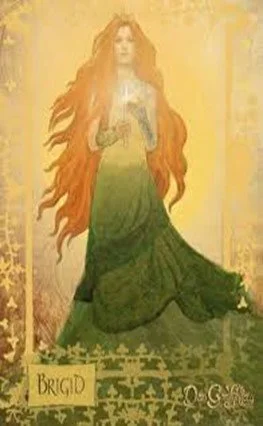
It is said that Brigid was a fiery red-haired Goddess, her father being recorded as the Dagda, the chief of the Tuatha de Danann. The Tuatha de Danann are a group of members of an ancient race, that is said to have inhabited Ireland before the historical Irish. They are credited with the possession of magical powers and great wisdom.
Folklore says that Brigid was born with the sunrise and refused any milk except that of a red-eared white cow. There is no record of Brigid’s mother but many theories are told. One being that the Morrigan is her mother based on her only nursing from the red eared cow, which a tale is told of the Morrigan shapeshifting into. The Dagna held two wives the fiery war Goddess the Morrigan and the water Goddess Boann, but neither deity is said to be her mother.
“Come over the hills,
O Brigid Bright and fair,
Come over the hills,
to your daughter who’s there,
Kindle the flame,
that illuminates your name,
And Ill keep that Fire — bright, forever.
For strong grows the oak,
in Brigids ancient grove,
And fair glide her swans,
on Her river they float,
Clear runs the water within her blessed wells, nd bright burn her fires … and forever are Her spells.”
(modified by Reverend Richoz for tome rhyme per request.)
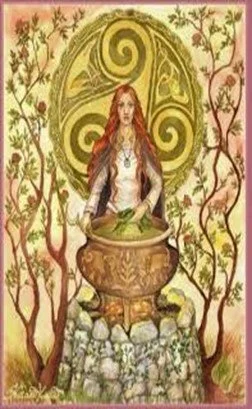
Not only a Fire Goddess, Brigid was also a Water Goddess. Many holy wells found over Ireland and Scotland are dedicated to Brigid. Water is Brigid’s Element of Healing and the wells are seen as sacred and healing. The wells in Kildare and Clare County are two of the most famous sites in Ireland. There is a custom of tying ribbons or strips of cloths called clooties near a well as a form of healing magick. The clooties are dipped in the water and then touched to the part of the body that needs healing. The clootie is believed to absorb the ailment and is then tied to the tree, were as it gradually rots away takes the ailment with it. Metal offerings to the wells are appropriate for Brigid as well with her being the Goddess of Metalcraft. Today people offer coins to “wishing wells” without even realizing that they are keeping a sacred tradition alive.
“Walls against the wind,
Roof against the rain,
Hearth to hold the fire,
And Brigid encompassing all”
What is one way you could honor Brigid in your home?
Contemplations 101
Connections
We have not explored them in a few countries as we have walked, but do you still see the connections we have made as we have traveled around the world? Do you continue to see the Divine, energetic connection we are all a part of or that you can utilize in your practices, freely, from this point forward? For thousands of years now, this is how it has been.
Tell us what you see, or write about it in your Journal/BoS.

Tuesdsay WN3
General - Journal - Book of Shadows
SUBMISSION: WN3 TUE HONORING BRIGID
(Due by Sunday)
Please take a moment to read the Lessons provided by Practitioners Baxter and answer the question found at the end of the passage in ONE PARAGRAPH or n=more, or by a picture submission of what you practice with Brighid. .
EMAIL
Three Circles Medicine & Magick™
Please utilize the above email link
IF NO BUTTON IS PRESENT
to receive full Submission credit.
Lessons are subject to change without notification to Practitioners.
Late Submissions receive no credit without prior approval.