

Wahya Circle
Tuesday Travels
World Studies 101
Polynesia
Hawaii, Hanga Roa, Aotearoa
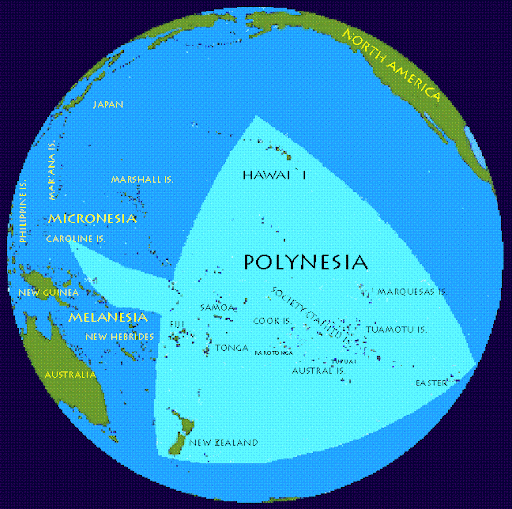
Polynesia is a group of islands in the Pacific Ocean that cover an area of over 800,000 square miles and fits roughly into a triangular shape with New Zealand, Hawai'i, and the curious Easter Island as its border points. To give you an idea of that size, Alaska is just over 665,400 square miles. The area considered Polynesian is slightly bigger with room to stuff in New Mexico!
Again, a misnomer of exploration, the term was borrowed from French polynésie, coined by Charles de Brosses in 1756, from Ancient Greek πολύς (polús, “many”) + νῆσος (nêsos, “island”). According to Moon Handbooks Tahiti, de Brosses first used the term to refer to all Pacific islands. Polynesia (as stated from the Greek words meaning "many islands") is a large grouping of over one thousand islands scattered over the central and southern Pacific Ocean.
Polynesian culture, beliefs and practices of the indigenous peoples of the ethnogeographic group of Pacific islands known as Polynesia. It encompasses a huge triangular area of the east-central Pacific Ocean. The triangle has its apex at the Hawaiian Islands in the north and its base angles at New Zealand (Aotearoa) in the west and Easter Island (Rapa Nui) in the east. It also includes (from northwest to southeast) Tuvalu, Tokelau, Wallis and Futuna, Samoa (formerly Western Samoa), American Samoa, Tonga, Niue, the Cook Islands, French Polynesia (Tahiti and the other Society Islands, the Marquesas Islands, the Austral Islands, and the Tuamotu Archipelago, including the Gambier Islands [formerly the Mangareva Islands]), and Pitcairn Island. At the turn of the 21st century, about 70 percent of the total population of Polynesia resided in Hawaii.
New Zealand is the largest of the Polynesian countries in terms of both population and area. New Zealand is home to over 4.9 million people and spans over 103,483 square miles (268,021 square kilometers). For reference, it is about the size of Colorado and has the population of Alabama, hence, pretty rural. Of the over 4 million people in New Zealand, only 260,000 identify themselves as Polynesian.
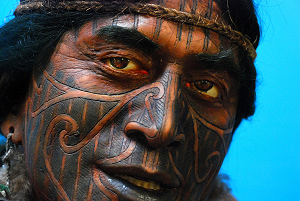
Māori are the tangata whenua, the indigenous people, of New Zealand. They came here more than 1000 years ago from their Polynesian homeland of Hawaiki. Today, one in seven New Zealanders identify as Māori. Their history, language and traditions are central to New Zealand's identity.
Aotearoa (Māori: [aɔˈtɛaɾɔa]) is the current Māori name for New Zealand. Several meanings have been proposed over time for the name; the most popular translation usually given is "long white cloud", or variations thereof. This refers to the cloud formations which helped early Polynesian navigators find the country.
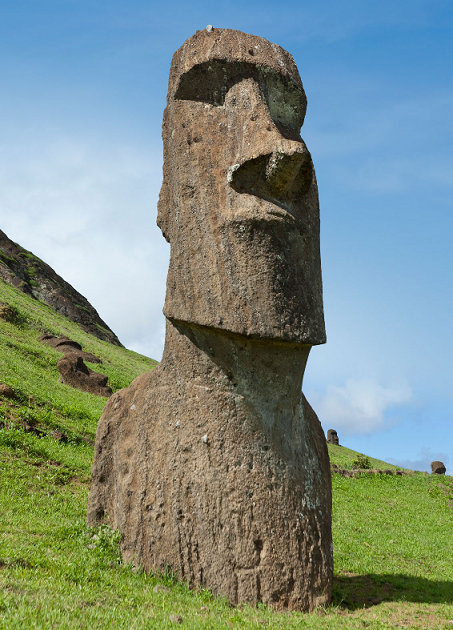
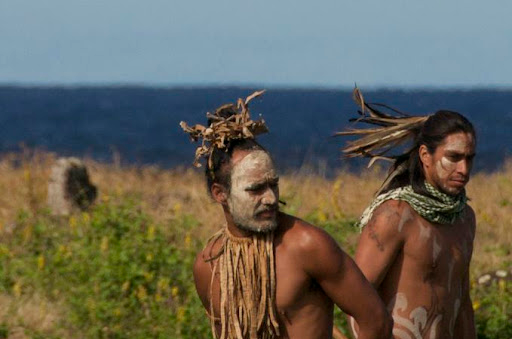
The Rapa Nui are the indigenous Polynesian people of Easter Island, or indigenously the island is called Hanga Roa. The easternmost Polynesian culture, the descendants of the original people of Easter Island make up about 60% of the current Easter Island population and have a significant portion of their population now residing in mainland Chile. For reference here, Easter island is 0.01 times as big as Hawaii.
And, as you know, of all Polynesian, it seems to be the Hawaiians are somewhat assimilated into “American culture” in many ways. Many are working diligently to restore and reclaim the culture taken from the indigenous people in our recent history.
World Studies 101
Polynesian Traditions & Culture
Most Polynesians are still polytheistic and believe in many gods or goddesses paying homage to one as patron, such as Pele. They also pray regularly to home guardians and land spirits. Practitioners of this culture are very respectful of Elders and venerate their Ancestors. (Just as they do in many Asian cultures.)
There are numerous “social traditions” as well. They are often linked to activities of Polynesian people's daily life – past and present. The most well known are: javelin throwing, stone lifting, fruit carrier race, the copra contest, and coconut tree climbing. Often, these are subtle things that “outsiders” should keep in mind when visiting. Not all islanders converted to the dogma that the missionaries were selling.
Correspondences 101
Pineapples
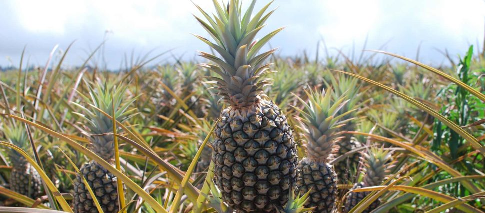
No. Pineapples do not originate from Hawaii. In Hawaiian, a pineapple is called “hala kahiki”. This is because the Hawaiians thought the pineapple resembled the “Hala” fruit. “Kahiki” means foreign, hence pineapples became “foreign Hala's” in Hawaiʻi.
Only when the land was exploited did pineapple begin to be grown there. Not native to the Hawaiian islands, pineapples can be traced back to their origin in South America. They are linked with Hawaiʻi because of the large pineapple industry that was built on Hawaiʻi in the early 1900s. For a while, Hawaiʻi supplied over 80% of the world’s output of canned pineapple. This was the “newest” land to be exploited by the United States.
Exploited by who? Funny you ask. The exploitation began early by various colonizers. In time, it became Dole. Originally operated as a fruit stand beginning in 1950, Dole Plantation opened to the public as Hawaii's “Pineapple Experience” in 1989. Today, Dole Plantation is one of Oahu's most popular visitor attractions and attracts more than one million visitors each year. That plantation is a current wound for many islanders.

Think About It
Just sit with today’s Lesson for a moment. For some, this is real current history. How does it make you feel? What do you think? This particular exploitation of an indigenous people is well documented in American records. Have you ever researched it? What do you know, or what have you realized, maybe even for the first time, reading this Lesson?
#FoodForThought
Tuesday WO2
General - Journal - Book of Shadows
SUBMISSION: WO2 TUE CONTEMPLATIONS 101 (Due by Sunday)
Please spend a few moments with the above passage and answer Contemplations 101 in ONE PARAGRAPH or more.
EMAIL
Three Circles Medicine & Magick™
Please utilize the above email link
IF NO BUTTON IS PRESENT
to receive full Submission credit.
Lessons are subject to change without notification to Practitioners.
Late Submissions receive no credit without prior approval.