


Wahya Circle
Odin’s Day
As We Will It: Protection
Shield this Journey with your Sight.


Mugwort
As we continue to stay in the Norse vein this week, going through the names of days (a refresher for some) of which we will be continually refreshing ourselves to the meanings of all things we use in daily life. We will begin to see how magick has always been and always will be around us. This week, we will touch on one of the “Nine Sacred Herbs” as today is “Odin’s Day”.

If you could only pick nine herbs to rely on for the rest of your life in your magick, which would they be? It's a tough question for many Practitioners, but the Norse Path holds nine herbs as the most sacred. They even have a poem or charm -- called Lacnunga (Remedies) -- written about them, which dates from around the 10th Century CE. The herbs of the Lacnunga Manuscript were highly valued and used as treatment against poisons, infections and for curing wounds. These same herbs are still highly regarded and widely used today.
Mugwort (Artemisia vulgaris):

>>NOT to be confused with St. John’s wort, an unsafe myth which you may see as you Journey. Regardless, St John’s wort has a Latin name of Hypercum perforatum, with the common names of Klamath weed and goatweed. It is a completely different plant with its own medicinal values.<<
Mugwort (Artemisia) is well known as the premier herb for dreamwork. The common names for it are: Artemis Herb, Dream Herb, Felon Herb, Moon Herb, Sailor’s Tobacco, and Traveller’s Herb. The silver on the underside of the leaves shows an affinity for the moon and the female reproductive system. Mugwort tea and essential oil help ease PMS symptoms.
The essential oil also helps to relax the brain, improve circulation and aids in delivering nutrients to brain cells. It is a stimulant which helps keep the female hormones functioning properly. Mugwort itself gets its name “mug weed” because it used to be used to flavor ale/beer before the use of hops became popular. Moxa, which is used in acupuncture, is made from dried Mugwort. In the nine herbs charm Mugwort was named “Una,” the oldest herb.
Those are the basic medicinal uses for Mugwort, but what about magick? First and foremost, know it was chosen in this first week of your learned Journey for a reason. That reason being Protection. Second, it is known as the Artemis Herb for a reason and it is said that it is used to connect with that female Divine energy.
There is much to learn as we continue to sip from the firehose of Magick.
Please read on to learn more. See if you can spot the contradictive stories. Can you see how the dangerous hearsay of calling it “St John’s wort” happened? …
COMMON(A common source that many Practitioners use.)
MAGICKAL (A trusted resource)
As stated, these are not the ONLY uses. We can grow into the exploration of more as we journey.
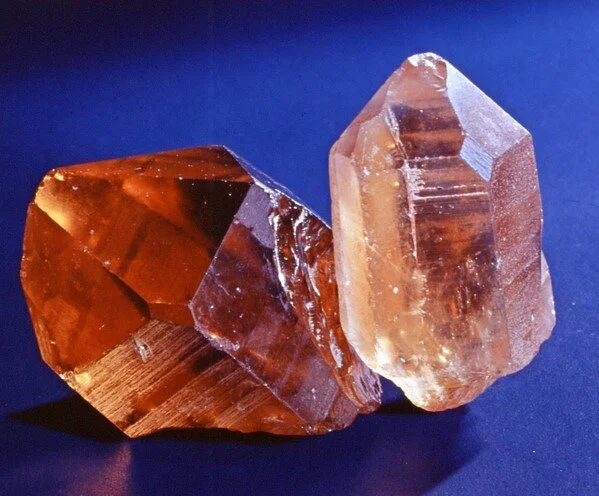
Citrine
Citrine is not only a stone of Wednesday, or Woden’s (Odin) stone, it also has these many uses in Medicine & Magick. We will explore them further as we begin to work together:
CORRESPONDENCES CAN BE GATHERED FROM THE FOLLOWING SITES. Most of this has been proven or vetted through current Practitioner use over time. Each result may vary as each Stone Ally vibrates differently sometimes with different Practitioners.
COMMON (Although biased on some topics, this is a trusted source for learning.)
Citrine is that yellow-to-brown quartz variety used in many holistic, crystal healing traditions—not modern medicine—to boost energy, aid digestion, and enhance mental clarity. It promotes optimism, detoxifies the body, and supports the spleen and pancreas, often by acting on the Solar Plexus Chakra. (Just lay the crystal across the abdomen while meditating for example.)
MAGICKAL (Although not all uses are mentioned, this is a good start and much trusted source.)
Citrine is primarily associated with the Solar Plexus Chakra (Manipura), the third chakra, which governs personal power, confidence, self-esteem, and willpower. Its sunny, yellow energy is used to boost joy, abundance, and motivation while aligning with the center for manifestation.
What Is Your
Learning Style?
This is a link to a short survey that will help you identify your initial beliefs about how you learn. You will be asked a few questions, and must choose from among several possible answers. There are no wrong answers! The easiest way to learn or improve your magickal ability is to KNOW how you learn. This will end up being the primary way you, “see one, do one, teach one”. What is your learning style? Before we go much further we need to determine the best way for shared knowledge to reach your inner mechanisms.

Below, you will find this link to read more about the definition of what a “learning style” is. It is a wonderful concept that will help your approach in learning magick. Use it as a tool to your advantage. Take some time perusing the page from the first link. On the second link there is a test that can help you determine the way you learn. (Whether you are conscious of it or not.)
KEEP A COPY OF THIS RESULT. IT WILL COME IN HANDY IN THE FUTURE.
What is a Learning Style (Definition)
>READ THIS< Four styles explained.
EDUCATION PLANNER
What is MY Learning Style
(Link to a test from a trusted source.)
>TEST IS ABOVE<
You may copy and paste for your submission to 3CMM.
Oaths to Odin
The All-Father,
a Var Specialty
As we know, Wednesday is named for Odin. This name has been carried with this day for quite some time as well. Today, we learn of something that is said to be extremely important to Odin, …Kindred.
Kindred refers to a person's relatives, family, or kinfolk collectively. As an adjective, it describes people or things that are similar, related in nature, or have a shared origin, such as "kindred spirits". It often implies a close, natural connection or affinity
For Odin, “kinship was of prime importance”. This meant, throughout viking culture, it signified that a peaceful relationship and strong bonds within families and kinship groups was important also.
Peace. Protection. Loyalty.
In keeping with what was held as important to the All-Father, we also learn of Vár: The Norse Keeper of Vows that Punished Oath Breakers. (Aligns rather nicely with Tyr who also prided Himself on monitoring social contracts.)
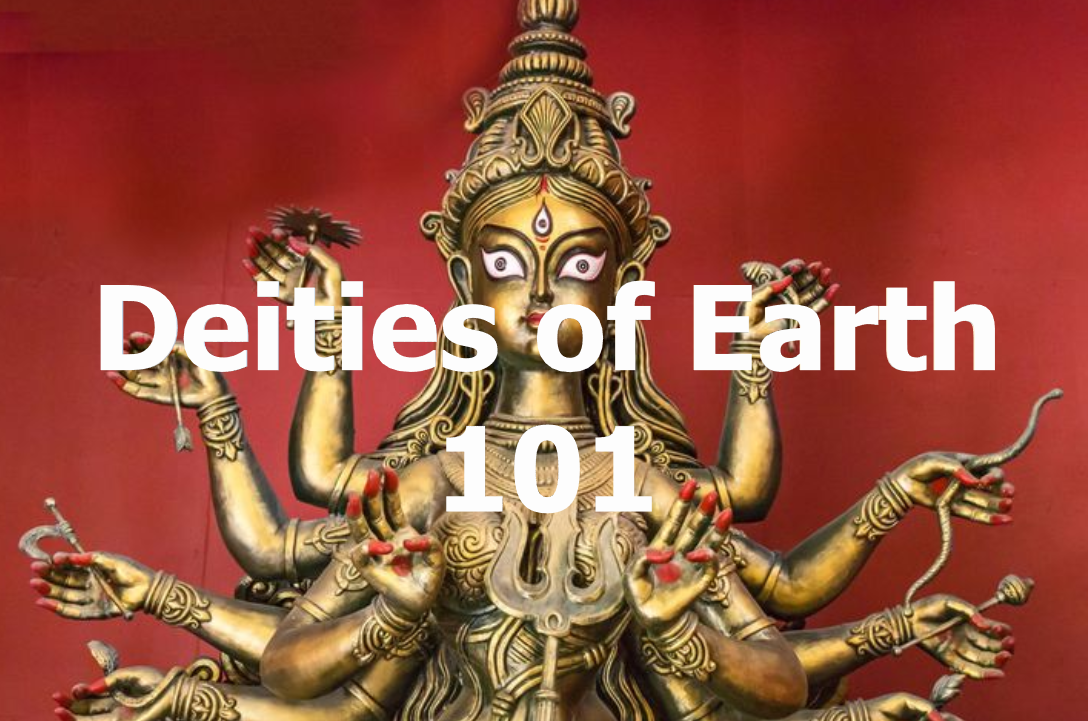
Var, or Vara, is the Keeper of Oaths. She can be invoked to help people keep their promises, for example. Var will do so to the best of Her ability, strengthening one's will and integrity, utilizing the best resources of energy available to the Practitioner.
However, we do have a certain amount of Free Will on these things, and if we choose to violate our oaths in spite of Var's best efforts, it is believed that She will have the right to punish for the broken Oath or foolishness. Kind of an “energetic debt”. Her name comes from the word varar, meaning “a private contract”. It is cognate to the word vow, and possibly to the Old Norse word varda, meaning “to warrant, guarantee, or answer for.”
Norse pantheon members prided themselves on Honesty, Truth, Justice, Honor, etc.
Any contracts can be placed on Her altar to hallow and keep. Her power lies in how we speak our words, and how those words shape our *maegen, so be careful in the wording of what you promise. Especially if you are a follower of such a noble Path. *maegen – the Norse had no word for “luck”, so some scholars believe in addition to physical strength, maegen also ment ‘luck’. (Or, was it magick?)
“Vár was born of two powerful deities in Asgard and great things were expected of Her, yet She could not choose Her path. Everything came so easily to Her that it was found to not hold interest for Her. She could not commit to any one skill enough to master it. Thus, She drifted aimlessly, told by the All-Father that if nothing else She could marry and produce powerful children for Asgard. Depressed, She was tricked into discovering Her true talent — for binding people to their oaths — and given a drop spindle to record these in yarn for the Norns (the Fates). She is witness to promises, agreements and marriages, having no path of Her own, often being little more than a silent ghost watching other people’s major life events.”
A way to tap into this energy, to honor it if you follow this Path, is by making a promise and holding to it. You can do this by making detailed plans for your goals, and by studying history and laws regarding contracts related to those goals. Furthermore, you may call on Vár to punish oath-breakers — at your own risk as Practitioners of this Path say. All of your own broken vows will likely be inspected before action is taken if you do. Practitioners of a Norse Path say It is better to make reparation when you break a promise than to wait for the consequences.
According to the Experience of many, should you choose Her as your patron deity, Vár does not care for food, unless it is somehow symbolic of something important to you. But She does like incense and fragrant oils. Then again, She may come to you completely in a different way. Keep an open mind if you do and are asked to do something NO ONE else is.

The symbol of Var is the oath-ring. Arm bands were not merely ornamental. They were often used to cement bonds of loyalty between a lord and his warriors in a society where men lived and died by their honor, and often the sword. They were often bestowed upon young adult males to symbolize their coming of age. In addition, some groups used the rings—which were made of precious metals—as a form of, easily transportable (and protectable) currency, in a time before coins or paper money.
Some feel “wedding rings” evolved from this, as Var appears in the Poetic Edda. There, She was evoked to witness the vow between Thrym and His "bride" (Thor in disguise).
“Then loudly spoke Thrym, the giants' leader: "Bring in the hammer to hallow the bride;
On the maiden's knees let Mjollnir lie, That is both the hand of Var may bless.”
Her name also appeared in a runic inscription found in Norway dating back to around the 12th century:
Wise Var of Wire ["woman of filigree," meaning "wise bejeweled woman"] makes (me) sit unhappy.
The scholars explained in this sentence that "Var" in this case appeared as the kenning for the woman. It simply meant "women made me miserable". Sometimes, they translated that "marriage made me miserable" because Var was the keeper of promise and this time it referred to the promise between a man and a woman (NOT necessarily a “male” and “female”) which was commonly known as a wedding.

Knowledge is Power
It is thought by many Practitioners that this is one of the best herbal books to have on your reference shelf. It is accurate, concise with descriptions and has plenty of illustrations. It is recommended for beginning identifying plants or as a quick reference for the more seasoned herbalist. This book is recommended for use while learning what parts of the plant are used and why.
DISCLAIMER: One should always know what they have before using it to make any remedy. A field guide or sound knowledge of the plant is recommend for plant identification purposes. And as always, consult with your medical care provider FIRST.

The Complete Illustrated: Holistic Herbal: A Safe and Practical Guide to Making and Using Herbal Remedies by David Hoffman

Odin Knowledge
Nine Noble Virtues
The Nine Noble Virtues (NNV)—often associated with Odinist and modern Heathen ethics—are a set of principles rather than seven, frequently including Courage, Truth, Honor, Fidelity, Discipline, Hospitality, Self-Reliance, Industriousness, and Perseverance. These virtues represent a code of conduct derived from Norse sagas to live a life of honor and strength.
Courage: Facing fears and hardships with bravery, often associated with Thor.
Truth: Honoring reality, honesty, and living without hypocrisy.
Honor: Maintaining a strong reputation and integrity, crucial for social standing.
Fidelity: Loyalty to family, community, and oaths sworn.
Discipline: Self-control and adherence to personal duty.
Hospitality: Treating guests with respect and warmth.
Self-Reliance: Taking personal responsibility and being resourceful.
Industriousness: Dedication to hard work and productive effort.
Perseverance: Enduring challenges and continuing despite setbacks. [1, 2, 3, 4, 5]
These virtues are often considered the "Nine Noble Virtues" because of the sacred significance of the number nine in Norse mythology (e.g., nine worlds, nine nights for Odin to find the runes

Learning Styles
Now that you know your learning style, how will you integrate it with your practice? If you already knew your learning style, how can you improve your absorption of techniques and knowledge presented? What can you add to your magickal days to have a deeper connection with Self and Practice related to your LEARNING STYLE?
Think about it.

Wednesday WA1
General - Journal - Book of Shadows
SUBMISSION: WA1 WED LEARNING STYLE
(Due by Sunday)
Please read the passage regarding learning style.
You may copy and paste your results into an email
OR screenshot and email them.
EMAIL
Three Circles Medicine & Magick™
Please utilize the above email link
IF NO BUTTON IS PRESENT
to receive full Submission credit.